
Functional Depression
The Exhausting Art of Showing Up
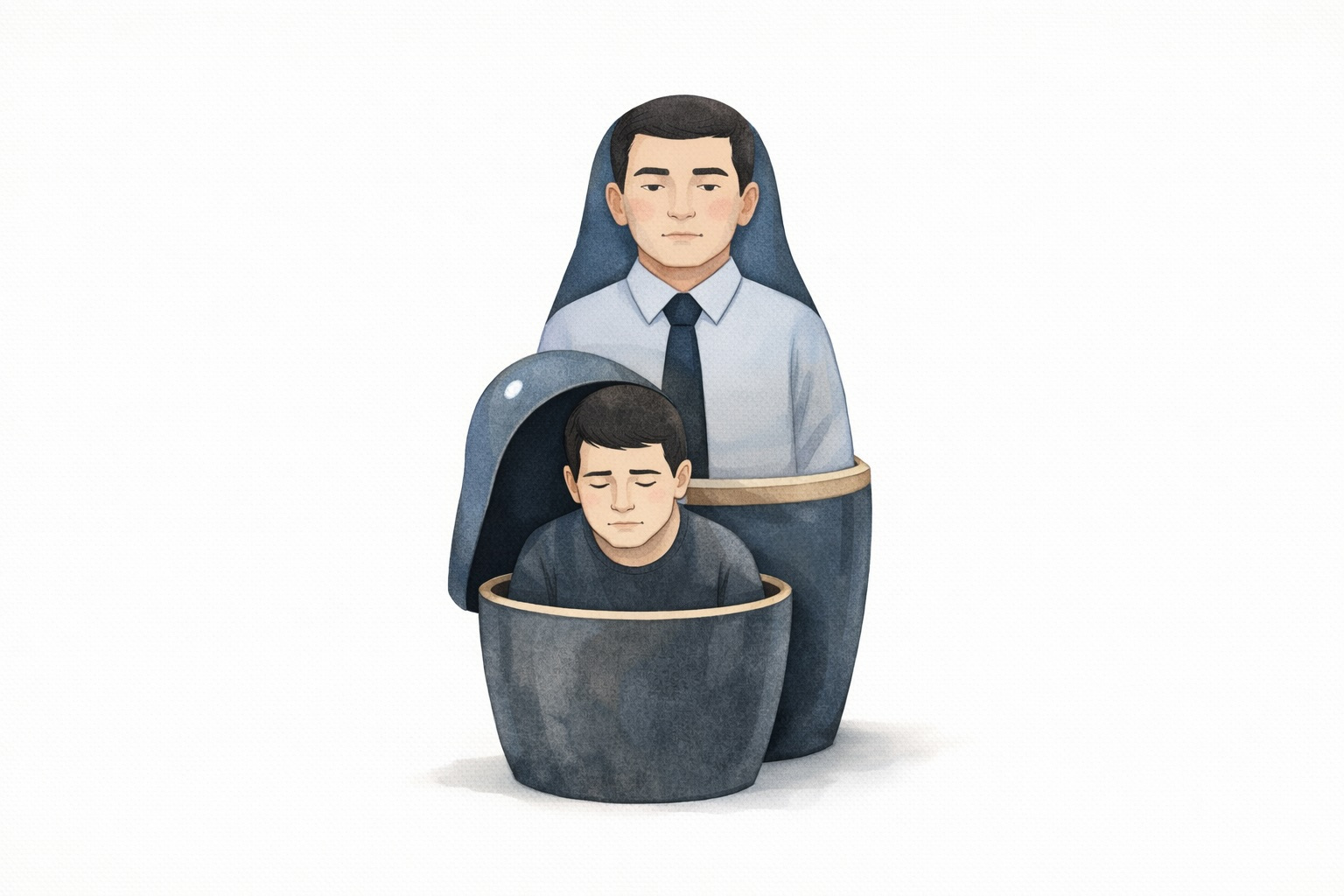
You wake up.
Clean yourself. Get dressed. Go to work. Do your thing. Go home. Go to bed.
Wake up.
Do it again.
Every day is exactly the same.
That Nine-Inch-Nails song? You feel it when you’re functionally depressed—it’s the soundtrack to your life.
It’s similar to Groundhog Day with Bill Murray, except there’s no character arc, no redemption, no lesson learned.
You’re just living the same day over and over, putting out enough effort to complete whatever needs doing.
Nothing exploratory. Nothing with nuance.
Everything is straight logic: yes or no, make it or don’t, black and white. Push the button, keep in line, mind yourself. You’re not alive, you exist.
It may turn into feelings of exhaustion, pressure, compliance, or dissociation.
This is functional depression, or high-functioning depression.
And if you’re living it right now, I need you to know something: what you’re doing is extraordinary and brave.
What Functional Depression Actually Is
Functional depression, or high-functioning depression, is someone who can function like any “normal” person and—either sometimes, most of the time, or nearly every day—they can show up.
“Although high-functioning depression is not an official clinical diagnosis, it is now commonly used to describe someone who appears to be doing well in daily life—maintaining relationships, holding a job, and meeting responsibilities—while struggling with significant symptoms of depression internally,” says Adrian Jacques H. Ambrose, MD, MPH, MBA, FAPA, associate professor of psychiatry at Columbia Vagelos College of Physicians and Surgeons. “The longer it goes untreated, the more entrenched the emotional distress can become.” [source]
But here’s what people don’t understand: not everyone with depression can do this.
Some people are completely bedridden. They are unable to get out of bed at all. Zero functionality.
I’ve lived that—sleeping entire days away, unable to move. I know what those days feel like.
I speak from lived experience on both ends of this spectrum of functionality.
For me, depression waxes and wanes. It’s cyclical.
It gets really intense, then it drops to almost background noise.
You know when you’re in a kitchen and there’s a radio on?
If you want, you can listen to it. But you can also have a conversation with someone and not even hear it.
It’s always there. You’ll notice it if you pay attention. But otherwise, it just hums in the background.
Functional depression can feel like that for me when it’s not acute.
The radio is always on. You’ve just learned to tune it out while you do what needs doing.
What It Looked Like for Me
Let me walk you through a typical day when I was functionally depressed.
This was 2013-2014. I worked at a marketing company focused on insurance products to fraternal organizations, community groups, that kind of thing.
Cubicle job. I have negative love for being in a cubicle.
I was surrounded by gray carpeted walls, everything neutral, occasional laugh or cackle from a random cubicle to disrupt the silence.
I had to get up and walk in order to see out window—nature.
I woke up at 6:30 a.m. Out the door by 7:00. Half-hour drive, maybe 40 minutes.
Once I got there, I got right to my desk and started working immediately.
No dilly-dallying. No coffee chat.
I had coworkers around me—someone to my right, someone diagonally behind me on the left.
Those were the only two I’d strike up conversation with, and only if I had questions.
They had headphones on, deep in work. So was I.
Mostly my head was focused on getting work done, expending exactly the energy required and nothing more.
At lunch, I’d go out to my car and eat my sandwich alone.
There were probably 40 people in that department I could have had lunch with. I chose my car. Every time.
I self-isolated constantly. The only people I interacted with were one guy in my department and my direct supervisor.
If other people talked to me, I was nice.
However, I followed my great-grandfather’s rule: children are to be seen and not heard.
I only spoke when spoken to.
Low energy expenditure. Mask just enough to make people believe you’re okay.
What they saw versus what was real. Completely different?
I remember sitting at my desk inside the cube, more than once, pausing for five minutes to give my eyes a screen break.
I might start thinking about something—and suddenly I’d find myself spontaneously crying.
All related to the depression. Hiding the crying was a challenge, but I’d learned how to cry without making noise, and ways to deal with tears as a child.
That skill came in handy when I didn’t want a ripple in the pond, when I needed to get small and not show emotion.
So I cried silently at my desk multiple times times a day, over the course of so many days I lost count. And no one knew.
In fact this may be the first time I’ve shared about that period of time and crying daily: at work, and on the way to and from work.
The Cost
Does functional depression burn through more energy than “regular” depression?
Yes, it does for me. perhaps not others. You would need to ask them.
Do you crash harder at the end of the day?
Absolutely. Especially if masking’s involved. The more masking during the day, the more exhausting it is.
Weekends?
I isolated when I could. Didn’t do much outside family obligations.
I ran errands, took care of things, helped my boys, supported my spouses endeavors, and maybe watched a movie or worked on projects when I wasn’t feeling like shit—which is isolation time.
But mostly, weekends were recovery time from maintaining the performance all week.
I would get lost hiking in the mountains with my dog.
Does maintaining the performance make the depression worse, or does the structure help?
Actually, the structure helps me. And here’s why: my brain doesn’t have to think. Brain sees it and, “Ah, here’s a framework. Here’s a structure.” The walls are defined. I know where the edges are and I don’t have to think about it.
When you’re given structure, you don’t have to create it yourself. You just follow the directions. That takes less energy.
Does masking you are ok make the depression worse?
It depends, its variable. It depends on what else is happening in your life.
If everything is shit all around, then yes—expending all that energy to mask will make the depression worse.
When energy is low, it’s a challenge to maintain the functional side of ‘functional depression’
It’ll make weekends darker for sure.
When the Functionality Fails
There were breaking points. Multiple times. The crying at my desk was one.
But the real failure was when I couldn’t contain the darkness anymore.
When I’m in that dark mode—non-functional, unable to mask—my psychic stench leaks out.
That’s what I call my energy when others feel it—psychic stench.
People can feel my dark energy when the stench is out.
They’ve said things to me. Both to my face and through others, asking what’s up?
They are able to pick up on something in the air, but can’t explain it.
Sadly, I was never very good at explaining what the hell was going on with me back then.
I had awareness that I had depression going on, but I didn’t understand the psychic stench, its source and story.
People imagined I was angry at them or mad at them.
It wasn’t that at all.
I was mad at myself.
The turning inward was so intense, so distraught, that I had no ability to mask on top of it.
I needed to be in a space where I could let that out without other people.
But I wasn’t self-aware enough to recognize those moments, and remove myself to a safe space back then.
So the stench leaked. And people began to think it had something to do with them.
It didn’t. It was just me and my depression.
The guilt and shame for having the ‘psychic stench’ got severe as I got clearer on what was going on.
Why People Don’t Recognize It
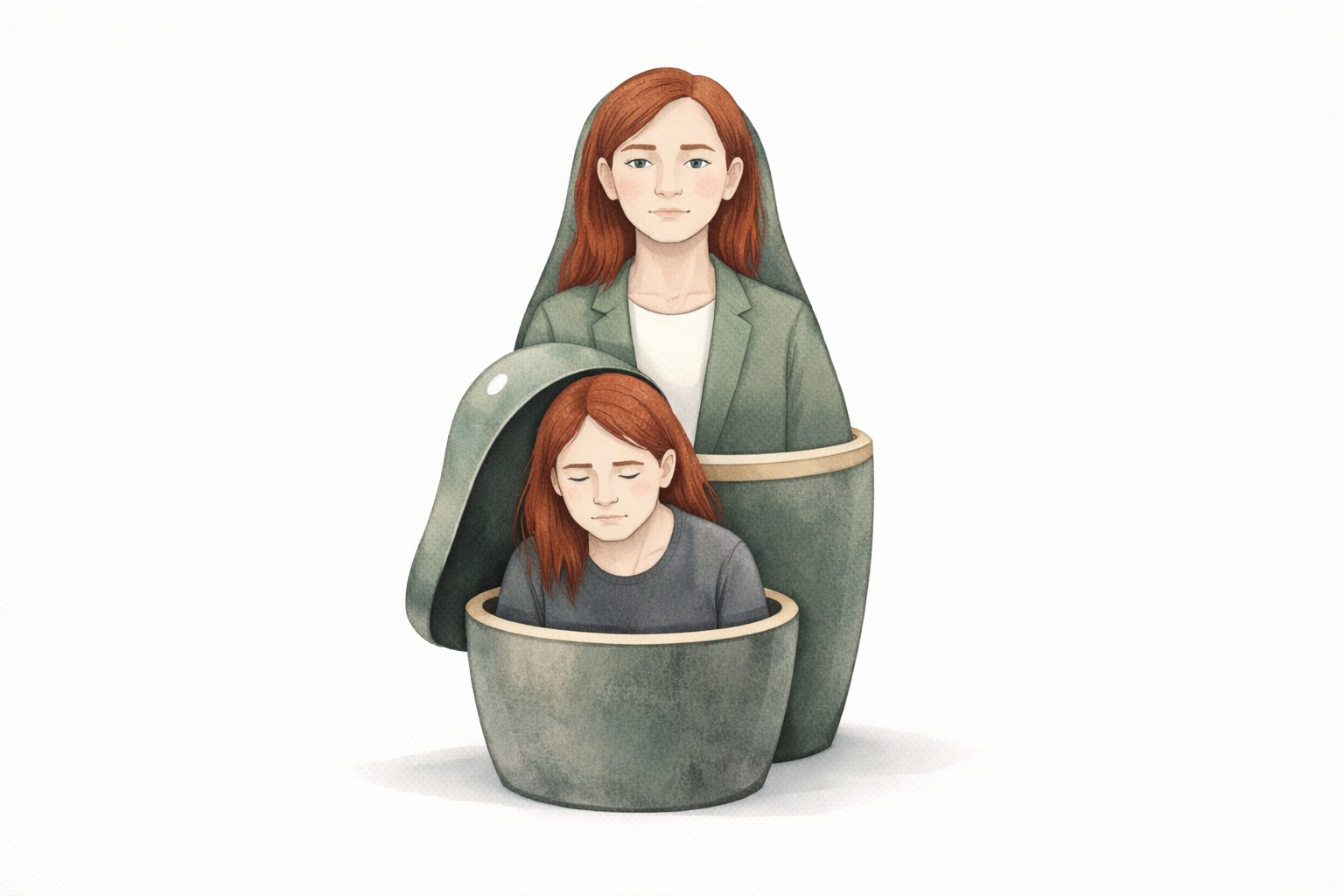
People don’t recognize functional depression as real depression because they don’t know it’s a form of masking. Your ability to show up and do what you’re supposed to do is masking.
You’re masking neurotypical-ness. You’re masking “normalcy”—what society deems “normal.”
You’re showing people there’s nothing wrong with you, everything’s fine.
Your affect may be flat, your voice a bit monotone—that’s from keeping it up the mask, and being physically and mentally exhausted.
If your mask is solid, most people have no fucking idea you’re depressed.
If you can mask your face, your expressions, your social interactions enough—they’re not suspicious. Out of sight, out of mind.
And what reveals they’re not picking up on you? Simple: they don’t say anything. They act normal toward you, and act as if there’s nothing wrong. That’s how I know they’re clueless I’m functionally depressive—unless I explicitly share it with them.
What I Want You to Know
If you’re functionally depressed right now, I want to acknowledge you. First thanks for reading this. I know the energy and effort you expend to show up every day. It’s more than most people can imagine. I want to acknowledge your courage and determination in the face of the dark side.
The strength and willpower it takes to set your depression aside—not in front of you blocking the way, but just next to you where you can still move forward—that’s remarkable. You’re able to get things done despite carrying that weight.
And honestly? I think it’s a goddamn superpower to pull it off.
Depression exists on a spectrum.
On one end, people are completely bedridden. On the other extreme, people are functional—they go out, show up in the world, participate.
They might have mild depression, or it may be severe but managed. Either way, they’re people suffering in silence.
And it can turn dark.
A life event, a trigger, something unexpected—the world pulls the rug out, the piano falls from the sky, and everything changes.
But right now, at this moment, you’re doing something extraordinary. You’re transcending your depression enough to function. You’re managing an invisible burden that most people can’t see and have no ability to comprehend.
I see you. I acknowledge both your depression and your ability to keep moving through it.
You’re not alone. And what you’re doing matters, big time.
It’s exhausting. I know. The radio never turns off—it just gets quieter sometimes.
But you’re still here. You’re still showing up. And that’s worth recognizing.
Be well.
Images were created through a combination of human creative direction and AI-assisted illustration.
For those living this right now: what's one small thing that helps you manage the exhaustion of showing up every day?
Real answers only, no "just meditate" bullshit.
I'll start: hiking alone with my dog on weekends. Isolation that felt restorative instead of punishing.