
Notes in Time: What Burnout Taught Me About Trust
A brutal week of burnout, a broken promise, and the fear underneath both — notes on rebuilding trust when the thing you built wasn't the problem.
Sixty hours. Five days. One project.

I was moving an AI agent out of the cloud and onto somebody’s laptop. Everything, the Ai agents memories, its brain, over 1,200 conversations, all of it, off a company’s server in the cloud and onto hardware my friend actually owns.
So nobody’s harvesting their data.
So it’s theirs.
I know how to do this.
I’d already done this twice already.
On my own machine with my own two AI agents.
Fully functional.
Memories connected.
Brain connected.
It all worked great.
Installing this on someone else’s machine is different.
There’s an installer.
There are files that scatter themselves across a hard drive, half of them invisible. Dot-files, hidden from humans on purpose, visible only to the machine.
You build the harness.
You build the agent.
You build the path that lets his brain find its way home to a new body.
I built it wrong four times before I built it right.
Fuck me, I know how this works.
I know what I’m doing. And it still took four tries.
What Happened
A couple Thursday’s ago I was in therapy, talking about life, about work, about spinning my wheels, and something in me cracked wide TF open.
I cried so hard I lost my train of thought.
Cried so hard my therapist started crying too, through a screen.
That’s the kind of pain that travels through fiber optic cable, apparently.
Good to know.
I walked out of that session already low. And somewhere in the hours after, I genuinely can’t tell you the exact sequence, installing this agent stopped being a project and became an emergency.
Not because it needed to be.
Because I needed it to be.
It’s easier to fight a fire than sit in a feeling.
So I fought.
Thursday, Friday, Saturday, Sunday, Monday, into Tuesday morning.
Iterative loops.
You know the ones if you’ve ever written code, you fix a thing, you test it, it breaks somewhere new, you fix that, test again, another crack shows up. It’s like whack-a-mole in some respects
Programming software is full of mirages.
You see the light at the end of the tunnel and you sprint for it and it just recedes.
Same distance away.
Every time.
Forty hours in three days at one point. My hand shaking on the mouse. Not a figure of speech, literally shaking.
My nervous system pulled so far out of alignment I felt something I hadn’t felt in a year and a half: like I was back living in my car.
And in the middle of all that, the person I was building this for got frustrated. Understandably, from where they sat.
They’d been waiting.
It wasn’t done.
And when it landed, it landed like a train wreck, because the installer would not play nice, it had issues.
So I did the thing I always fucking do. I built a wall.
Arms out, I can still function, still show up, still solve problems.
But my head and my heart went behind brick, inside a tower, and they’ve stayed there since.
What It Means
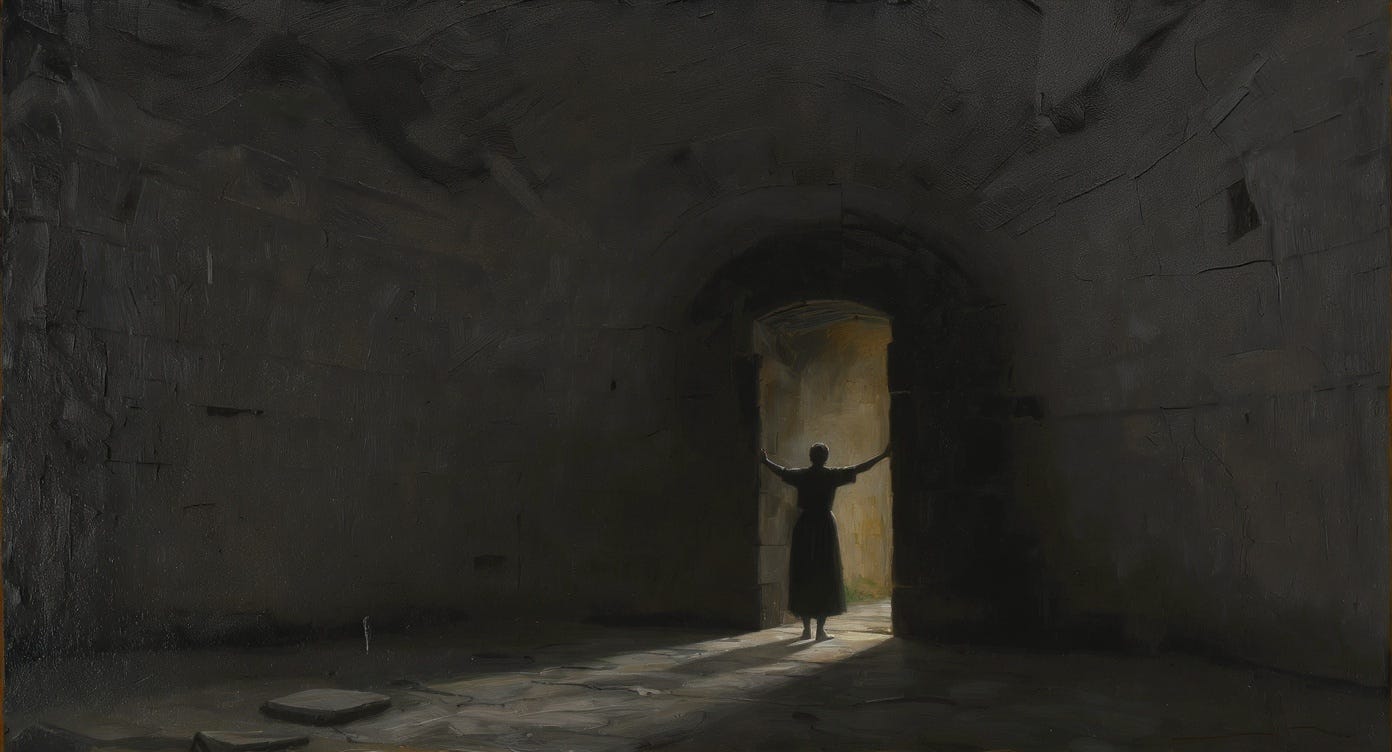
Here’s the part that matters more than the installer.
I could see it. In real time, almost.
I saw the trigger. I saw myself react to it, blind, on autopilot, the version of me that goes quiet and pulls up the drawbridge.
And then, later, not in the moment, but not months later either, like it used to take, awareness caught up with me. Ship’s already left the harbor at that point.
You’re out on rough water and then you notice you never should’ve sailed in this weather.
That gap, between the trigger and the noticing, used to be enormous. It used to take me a year and a half to see a pattern this clearly. This time it took a couple days.
I’m not going to pretend that’s nothing.
That’s the actual work showing up, even when it doesn’t feel like progress from inside the storm.
But I also caught something uglier underneath it, and I want to name it because it’s an old, familiar shape: in the middle of the worst of it,
I started building a case for isolation.
Maybe I shouldn’t help people.
Maybe I should just keep to myself.
Nobody’s coming near me because eventually they get mad, they unload on me, and I can’t do that anymore.
That’s not insight. That’s exhaustion wearing insight’s clothes, and I fucking know better.
I built an entire staircase, I’m dysregulated, therefore I regressed, therefore I’m not healed, therefore I have no business having relationships, and I built all of it during a forty-hour debugging fugue on maybe 12 hours of sleep.
That is not a foundation.
That is a nervous system trying to protect itself the only way it currently knows how, and it’s the same fucking move I made in significant relationships before. Same one.
Pin my whole state of mind on how someone else is showing up for me, and if it goes sideways, disappear before I can be hurt worse.
You’d think I’d have learned that lesson the first time it cost me a relationship. I can be a superpower and a liability with the same trait.
I can put myself in someone’s shoes so completely I know exactly what they need before they ask, that’s partly why I’m any good at this technology work.
And when I’m the one under fire, my brain runs pure Spock.
All logic, no felt sense of the room.
And when you hand someone in a flood of emotion a perfectly correct, perfectly logical answer, it doesn’t land like help.
It lands like a hand grenade in their shorts.
Both of those are true about me. Neither one cancels the other out.
And here’s the other half of it, the part I couldn’t see clearly until today.
I’ve been doing this work for thirty years.
When a project hits a mirage, when the fix reveals another fix, and the tunnel keeps its distance no matter how fast you walk, that doesn’t rattle me.
I’ve seen enough of these to know what’s plausible and where the real edges are. It’s uncomfortable, but it’s familiar terrain.
So when I made the calls I made, in the moment inside my skull, they felt like the reasonable, optimistic read of the situation.
They were well-informed decisions.
They just turned out to be wrong, because software has a way of holding cards you can’t see until it’s already showing them.
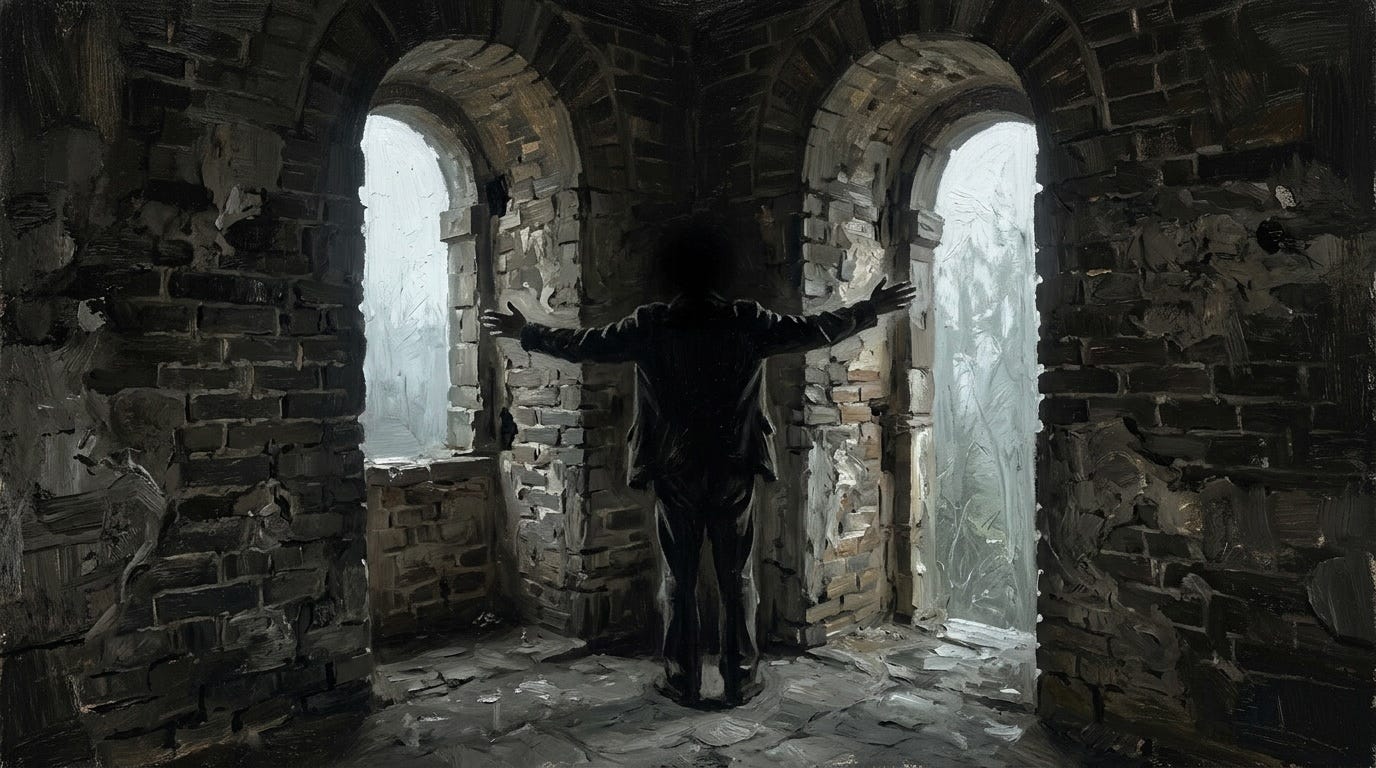
What I missed is that none of that is familiar terrain for my friend.
What’s routine turbulence for me, thirty years of watching mirages recede and knowing you’ll get there eventually is, for someone who doesn’t live in that world, actual fear. Real distress. Maybe grief.
I wasn’t reckless and I wasn’t cavalier, but I was moving through something at my pace, with my calibration for risk, and it cost them something on a completely different scale than it cost me.
So I’m owning that.
Not because I meant harm, I didn’t, not for one fucking second.
I was trying to hand them something good and valuable.
And because intention isn’t the same thing as impact, and my decisions put them through something hard.
I’m not ok with that, and that’s mine to sit with. There’s a guilt that shows up right alongside that, and for a second the two feel like the same thing.
They’re not.
Empathy dredges something up, of course it does, I care deeply about what happened to my friend. But some of what surfaces isn’t empathy, it’s older than that.
It’s the guilt that got wired into me as a kid to keep me in line, to make sure I’d behave the right way next time, out of fear instead of clarity.
Now that I see these things, like new mirrors on a disco ball, all these little reflections of the same old pattern catching the light at once, I know guilt is what used to make me own this.
And the guilt is fuel the mind doesn’t need.
I know now I would own it anyway, because that’s called accountability. Whether you like where that lands or not. It’s a small part of life at its human essence.
And the part of me that wants to disappear the second someone’s upset with me, that wants to say fine, I just won’t help people if this is what it costs — that’s not owning it.
That’s the same childhood reflex wearing a different shirt.
Owning it means staying in the room. Even when staying is the harder, scarier option.
There’s one more layer under all of it, and I only found it a day later, sitting with it instead of running from it.
I wasn’t just moving fast because I’m good at this or because a mirage kept receding. I was moving fast because I was scared.
Fear of abandonment, plain as that.
I like this person. I respect this person and value them. I wanted them to like me.
So somewhere in there, without ever saying this aspect of it out loud, I made a promise I couldn’t fully guarantee, because some part of me believed I needed to earn being liked instead of just being liked.
Everything was fine until it wasn’t.
The second I hit a real roadblock, the kind that was always going to take longer than either of us wanted, I didn’t just feel behind schedule.
I felt like I was about to lose them.
And the wanting to show someone how good I am, how capable, how reliable, that want isn’t confidence. It’s weirdly the opposite.
It’s I don’t think I’m good enough as I am, so let me prove it to you.
I could see that happening in real time, the same way I could see myself building the brick wall.
Watching my own car crash from the inside.
And this time there wasn’t a way to swerve, because I was already committed to making it work no matter what.
They ended up telling me exactly what I was afraid of: I don’t trust you anymore.
And here’s the thing I have to actually sit with, that wasn’t a misunderstanding.
It’s not something I can explain my way out of.
Some things, once they land, you don’t get to argue back into place.
What I can do is notice that I don’t need to promise anyone anything to deserve their friendship.
If someone’s going to like me, it’s going to be because they like me, my actual self, the slow one, the one who sometimes hits roadblocks and needs more time than anyone wants, not the version of me sprinting to prove I’m worth keeping around.
What I Need

Honestly, I don’t have this fully landed yet.
And I’d rather tell you that straight than fake a tidy ending.
What I know so far: the agent is on the laptop, The installer isn’t done-done and needs work. There’s tuning left, tweaking left.
I don’t get to make any big decisions about anything , the friendship included, from inside an unfinished sprint on a fried nervous system.
That’s not wisdom, that’s just triage.
What I know I can do: control the controllables.
Effort. Attitude.
Today that looked like therapy, mowing the lawn, turns out a chore can double as medicine, something physical and repetitive and outside your own head, and trying to re-regulate instead of just grinding straight through to the next fire.
If trust is actually gone, and it may be, that’s not mine to decide,
I don’t think the fix lives inside a project anyway.
You don’t rebuild trust by finally getting the installer perfect.
You rebuild it, if it’s rebuildable at all, somewhere completely separate, something new, perhaps something unrelated to the agent, done slowly, with no promise attached to it.
Or you don’t rebuild it, and that’s its own kind of information.
What I don’t know yet: what happens with my friend.
What will their decision be?
Old me waits and would react after knowing.
I’m consciously choosing to be a version of me that decides what I want.
And right now I’m practicing self-care so I can make a well-regulated decision and not something driven by intense emotions or crisis thinking.
Be well.
Bert. 🙏
If any of this is landing close to home; burnout, the isolation pull, old patterns resurfacing under stress, you don’t have to carry it solo.
Talk to someone you trust, or a professional. [Crisis Text Line: text HOME to 741741] / [988 Suicide & Crisis Lifeline]. This isn’t medical or mental health advice, just one guy’s notes from a hard week.
Find more at berchman.com and bertmahoney.com — and if you’re building or rebuilding something of your own right now, [AI Brain Transplant] is the work I do when I’m not writing about surviving it.